
Home / Criminal Defense
Fort Worth · Arlington · Tarrant County · North Richland Hills · Mansfield
Fort Worth Drug Crime Lawyer
Defending drug possession, distribution, trafficking, manufacturing and prescription drug charges in Fort Worth.
Quick Case Evaluation
Only your name and phone number are required. We’ll call you back promptly.




When you need a drug lawyer in Fort Worth, it is usually because a drug arrest moved fast. One traffic stop, one search of a backpack, or one knock on an apartment door can turn into a felony charge before you have had time to think. Texas has some of the toughest drug laws in the country, and even a trace amount of certain substances can lead to a state jail felony. If you have been arrested, you need a drug lawyer in Fort Worth who knows how these cases are built and where they tend to fall apart.
Andrew Decker Law defends people charged with drug crimes in Fort Worth. Drug arrests made in Fort Worth are prosecuted by the Tarrant County District Attorney and heard in Tarrant County courts, so that is where your case will be decided. That includes possession of a controlled substance, marijuana and THC vape charges, possession with intent to deliver, prescription drug offenses, and cases that carry federal exposure. As a criminal defense attorney in Fort Worth, Andrew Decker looks at every part of the case, from the reason for the stop to the lab report, because the details decide whether a charge holds up.
Arrested in Weatherford, Willow Park, Aledo or elsewhere in Parker County? Visit our drug possession lawyer Weatherford TX page for information about drug cases in Parker County courts.
Why Drug Charges in Fort Worth Are So Serious
Many people are surprised to learn how quickly a Texas drug case becomes a felony. In some states, possessing a small amount of a drug for personal use is a minor offense. In Texas, possessing less than one gram of cocaine, methamphetamine, heroin, fentanyl, or a THC concentrate is charged as possession of a controlled substance, a state jail felony. That is roughly the weight of a paper clip, and residue in a pipe or baggie can be enough to support a charge.
The consequences reach well beyond the courtroom. A drug conviction can follow you through background checks for the rest of your life. It can affect your job, your professional license, your housing, your immigration status, and your right to own a firearm if the conviction is a felony. For students and young adults, a drug charge can derail plans that took years to build. Talking with a drug lawyer in Fort Worth early gives you the best chance to protect them.
Tarrant County prosecutors handle a high volume of drug cases, and the Tarrant County District Attorney's Office takes them seriously. That does not mean every case is strong. Drug cases depend heavily on how evidence was found, how it was handled, and how it was tested. A drug crime attorney in Fort Worth who examines each step can often find problems that change the direction of the case.
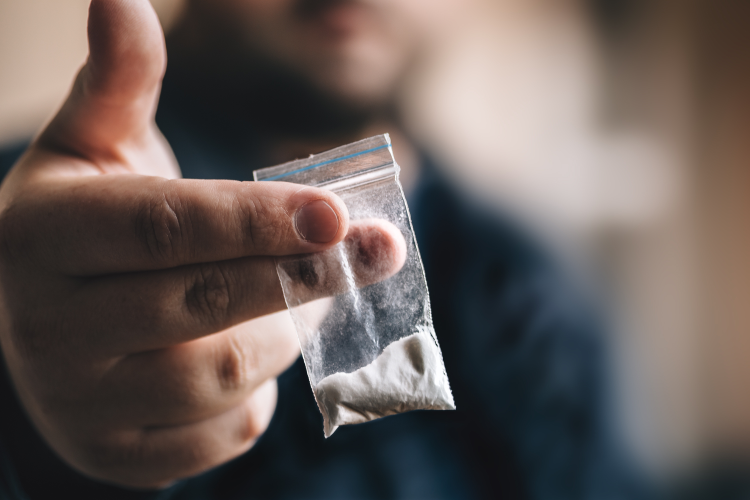
How Texas Classifies Drugs: What a Fort Worth Drug Lawyer Looks At First
Texas drug crimes are governed by the Texas Controlled Substances Act, found in Chapter 481 of the Texas Health and Safety Code. Instead of using only the federal schedule system, Texas sorts controlled substances into penalty groups. The penalty group, combined with the weight of the substance, determines how serious a possession charge is. For a full chart of every group, see our Texas drug penalty groups guide.
Weight in Texas includes adulterants and dilutants. That means the state can count the total weight of a mixture, not just the pure drug inside it. A pill that contains a small amount of a controlled substance may be weighed as a whole pill. A liquid may be weighed as the entire liquid. This rule can push a case into a higher felony level, and it is one of the first things a drug possession lawyer in Fort Worth should examine.
Penalty Group 1: Cocaine, Meth, Heroin and Opioids
Penalty Group 1 includes cocaine, methamphetamine, heroin, oxycodone, hydrocodone in many forms, and other dangerous drugs. Possession of less than one gram is a state jail felony, punishable by 180 days to two years in a state jail facility and a fine of up to $10,000. One to four grams is a third-degree felony, carrying two to ten years in prison. Four to 200 grams is a second-degree felony, with two to 20 years. Two hundred to 400 grams is a first-degree felony, and 400 grams or more carries 10 to 99 years or life and a fine of up to $100,000. Because nearly every Penalty Group 1 case is a felony, it also helps to understand how a Fort Worth felony lawyer approaches these charges.
Penalty Group 1-A: LSD
Penalty Group 1-A covers LSD and is measured in dosage units rather than grams. Fewer than 20 units is a state jail felony, and the punishment rises with the number of units.
Penalty Group 1-B: Fentanyl
Penalty Group 1-B was created for fentanyl and its analogs. For possession, fentanyl follows the same weight ranges as Penalty Group 1, so less than one gram is a state jail felony and the levels climb from there. The real difference is in manufacturing and delivery cases. Since 2023, Texas has punished fentanyl delivery more harshly than other drugs, and a person who manufactures or delivers fentanyl that causes someone's death can be charged with murder. Fentanyl cases in Tarrant County are prosecuted aggressively, and they call for a drug lawyer in Fort Worth who gets involved early.
Penalty Group 2: Ecstasy, Mushrooms and THC Concentrates
Penalty Group 2 includes MDMA (ecstasy or molly), PCP, psilocybin mushrooms, and tetrahydrocannabinol in forms other than the marijuana plant. That last category is why THC oil, wax, dabs and many vape cartridges are treated as felony drugs in Texas when they do not qualify as legal hemp. Less than one gram is a state jail felony, one to four grams is a third-degree felony, four to 400 grams is a second-degree felony, and 400 grams or more carries five to 99 years or life.
Penalty Group 2-A: Synthetic Marijuana
Penalty Group 2-A covers synthetic cannabinoids such as K2 and spice. These cases are measured by weight in ounces and pounds, similar to marijuana, and start as a Class B misdemeanor for two ounces or less.
Penalty Groups 3 and 4: Prescription Drugs and Codeine
Penalty Group 3 includes many prescription medications, such as Xanax (alprazolam), Valium (diazepam), and certain stimulants and depressants. Possession of less than 28 grams without a valid prescription is a Class A misdemeanor, punishable by up to one year in county jail and a fine of up to $4,000. Larger amounts become felonies. Penalty Group 4 includes compounds with small amounts of narcotics, such as some codeine cough syrups, and possession of less than 28 grams is a Class B misdemeanor.
Because the penalty group and the weight drive everything, the lab analysis is often the most important piece of evidence in the case. A drug charges lawyer in Fort Worth should never accept the arresting officer's description of a substance or the field test result as the final word.

Marijuana and THC Charges in Fort Worth
Marijuana Possession Penalties
Recreational marijuana remains illegal in Texas, and possession is still prosecuted in Tarrant County. Possession of two ounces or less of marijuana is a Class B misdemeanor, punishable by up to 180 days in jail and a fine of up to $2,000. More than two ounces up to four ounces is a Class A misdemeanor. More than four ounces up to five pounds is a state jail felony, and the charges climb to first-degree felony levels for very large amounts. Even a Class B charge is worth taking to a marijuana possession lawyer in Fort Worth, because a conviction stays on your record.
THC Vapes, Wax and Edibles
The bigger risk for many people is not the plant itself. It is THC in concentrated form. A single vape cartridge, a small container of wax, or a package of edibles can be charged as a Penalty Group 2 felony because Texas treats THC outside the plant differently from marijuana. A college student with one vape pen can face the same felony level as someone holding a gram of ecstasy, which is why a vape charge deserves a call to a drug lawyer in Fort Worth rather than an assumption that it is minor. For more on hemp-derived products sold in stores, read our guide, Are Gummies Legal in Texas?
Hemp vs. Marijuana
The hemp laws add another layer. Since Texas legalized hemp in 2019, the line between legal hemp and illegal marijuana depends on the concentration of delta-9 THC. Many products sold in Fort Worth smoke shops are marketed as legal hemp, and the rules for those products have changed several times. To prove a marijuana or THC charge, the state may need laboratory testing that measures THC concentration, not just a test showing that THC is present. A marijuana possession lawyer in Fort Worth can examine whether the lab work actually supports the charge.

Drug Paraphernalia Charges
Possession of drug paraphernalia, such as a pipe, grinder, or rolling papers, is usually a Class C misdemeanor punishable by a fine of up to $500. While that sounds minor, it still creates a criminal record, and it often appears alongside a more serious possession charge.
Drug Distribution, Trafficking and Intent to Deliver Charges
What Counts as Delivery
Texas law treats manufacturing, delivering, and possessing with intent to deliver much more harshly than simple possession. Delivery is defined broadly. It can include selling, giving away, transferring, or even offering to sell a controlled substance. You do not have to be caught in the middle of a sale for prosecutors to file a delivery charge.
How Prosecutors Try to Prove Intent
Prosecutors often try to prove intent to deliver through circumstantial evidence. They may point to the amount of the drug, the way it was packaged, the presence of scales or baggies, large amounts of cash, text messages, or statements made during the arrest. None of these facts automatically proves an intent to sell. People buy in quantity for personal use, carry cash for legitimate reasons, and own scales for many purposes. A drug defense lawyer in Fort Worth can challenge the assumptions behind an intent to deliver charge.

Delivery Penalties
The penalties for delivery are steep. Delivering less than one gram of a Penalty Group 1 substance is a state jail felony, one to four grams is a second-degree felony, and four to 200 grams is a first-degree felony. The largest quantities carry 15 to 99 years or life in prison. Fentanyl delivery carries even higher penalties, and a death connected to fentanyl delivery can lead to a murder charge.
Drug Trafficking Charges in Fort Worth
People often use the word trafficking for any case involving the sale or transport of drugs. Texas law does not have a single offense called drug trafficking. Instead, these cases are usually charged as manufacture or delivery, or as possession with intent to deliver, with the punishment set by the penalty group and the weight. When prosecutors claim that three or more people worked together, a large-quantity case can also be charged as engaging in organized criminal activity. In Fort Worth, trafficking cases often begin with a traffic stop on Interstate 20, Interstate 30 or Interstate 35W, a package intercepted in the mail, or a long investigation built on informants and wiretaps. When large amounts, more than one state or firearms are involved, federal prosecutors in the Northern District of Texas may take the case, and federal mandatory minimum sentences can apply. A drug crime attorney in Fort Worth should look closely at how the investigation started, whether every search warrant and wiretap was properly obtained, and whether the weight the state attributes to you is accurate. A drug defense lawyer in Fort Worth who gets involved before charges are filed may also be able to limit what you are charged with.
Manufacturing Charges
Manufacturing charges can arise from a home lab, a grow operation, or even the possession of chemicals and equipment the state claims were used to make drugs. These cases frequently involve search warrants, confidential informants, and undercover officers, which creates more opportunities to challenge how the evidence was obtained.
Drug-Free Zones and Other Enhancements
Texas increases the punishment for many drug offenses committed in a drug-free zone. These zones include areas within 1,000 feet of a school or certain youth facilities and within 300 feet of places such as youth centers, public swimming pools, and video arcades. In a dense city like Fort Worth, a large share of neighborhoods fall within one of these zones, which means an ordinary traffic stop near a school can raise the stakes.A drug-free zone finding can raise the offense level or increase the minimum punishment. Prior convictions can also enhance punishment ranges. A drug lawyer in Fort Worth should check whether the state can actually prove the distance and the type of location it claims, and whether a prior conviction qualifies for enhancement.

Prescription Drug Charges and Fraud
Possession Without a Valid Prescription
Not every drug case involves street drugs. Many Fort Worth residents are charged with possession of a controlled substance for carrying prescription medications without a valid prescription. This often happens when someone carries a family member's pills, keeps medication in an unlabeled container, or takes an old prescription that has since expired.
Prescription Fraud
Texas also prosecutes prescription fraud, which can include forging a prescription, altering one, doctor shopping, or using someone else's identity to obtain medication. These charges can be felonies depending on the penalty group of the drug. A valid prescription is a defense to possession, and proving that you had one, or that the medication was lawfully dispensed to you, can resolve some cases entirely. A drug lawyer in Fort Worth can help gather the pharmacy and medical records needed to show it.
State and Federal Drug Charges in Fort Worth
When Drug Cases Go Federal
Most drug arrests in Fort Worth are prosecuted in state court by the Tarrant County District Attorney's Office. Some cases, however, are handled federally in the Northern District of Texas, which has a courthouse in Fort Worth. Federal cases usually involve larger quantities, multiple defendants, trafficking across state lines, firearms, or investigations by agencies such as the DEA, FBI, or Homeland Security Investigations. Cases that combine drugs and a firearm carry extra exposure in both systems, which our Fort Worth gun charge lawyer page explains.
How Federal Cases Differ
Federal drug cases follow different rules. They can carry mandatory minimum sentences, and sentencing is heavily influenced by the federal sentencing guidelines. Parole has been abolished in the federal system. If you are being investigated by a federal agency, or if you have received a target letter, it is important to speak with a drug lawyer in Fort Worth before you talk to investigators.
What Happens After a Drug Arrest in Fort Worth
Booking and Bond
After a drug arrest in Fort Worth, most people are booked into the Fort Worth city jail or the Tarrant County jail. A magistrate will set bond and may add bond conditions, such as drug testing, travel restrictions, or a requirement to avoid certain people or places. Violating bond conditions can lead to re-arrest, so have your drug lawyer in Fort Worth walk you through them before you leave the courthouse.
Which Court Hears Your Case
Misdemeanor drug cases are typically heard in the Tarrant County Criminal Courts. Felony cases go to the Tarrant County Criminal District Courts at the Tim Curry Criminal Justice Center in downtown Fort Worth. Felony cases must be presented to a grand jury, which decides whether to return an indictment. Class C paraphernalia citations are often handled in municipal court.
Early Stages and Discovery
The early stages of a case matter. Before an indictment, a drug lawyer in Fort Worth may be able to present information to prosecutors, request lab testing, or push for the case to be refused or reduced. After charges are filed, the defense can obtain the police report, body camera video, lab results, and other evidence through discovery. Texas law requires prosecutors to share a wide range of evidence with the defense, and reviewing it closely often reveals the weaknesses in the case.
How Long Drug Cases Take
Drug cases can take months to resolve, particularly when lab testing is involved. Crime lab backlogs can delay felony cases, and the time can be used to build mitigation, complete treatment, or prepare motions that challenge the evidence.
Common Defenses a Fort Worth Drug Lawyer Can Raise
Every drug case is different, but many of the strongest defenses fall into a few categories. An experienced drug lawyer in Fort Worth will evaluate each of them against the facts of your arrest.
Illegal Search and Seizure
Illegal search and seizure is one of the most common defenses. The Fourth Amendment and the Texas Constitution protect against unreasonable searches. Police generally need a warrant, valid consent, or a recognized exception to search your car, home, or belongings. Officers cannot prolong a traffic stop without reasonable suspicion just to wait for a drug dog, and consent obtained through pressure or misleading statements may not be valid. When a search violates the law, the evidence it produced can be suppressed, and without the drugs, the state often cannot proceed. A drug defense lawyer in Fort Worth will request the body camera and dash camera video to see exactly how the search happened.
Lack of Knowing Possession
Lack of knowing possession is another key defense. Texas requires the state to prove that you knowingly or intentionally possessed the substance. Simply being near drugs is not enough. When drugs are found in a shared car, a shared apartment, or a common area, prosecutors must show additional facts, often called affirmative links, connecting you to the drugs. These links can include ownership of the car, the location of the drugs relative to you, statements you made, and your behavior. If the evidence points equally to someone else, the state may not be able to prove possession, and a drug possession lawyer in Fort Worth can use that gap to challenge the charge.
Lab Testing Problems
Problems with the lab analysis can also be decisive. Field tests used during arrests are known to produce false positives, and they are not reliable proof of what a substance is. The state usually needs a crime lab to confirm the identity and weight of the substance. The defense can question how the sample was tested, whether the lab followed its procedures, whether the weight was measured correctly, and whether the analyst is available to testify. In THC cases, the lab may also need to show the concentration of delta-9 THC to distinguish marijuana from hemp. A drug lawyer in Fort Worth can request the underlying lab data, not just the summary report.
Chain of Custody and Other Defenses
Chain of custody is the record of who handled the evidence from the moment it was seized until it was tested. Gaps or errors in that record can raise doubt about whether the substance in the lab is the same substance taken from you. A valid prescription is a complete defense to many possession charges involving prescription medications. In some cases, entrapment or the reliability of a confidential informant may also be at issue.
Weight Disputes and Mitigation
Even when the evidence is strong, a careful defense can affect the outcome. Weight disputes can move a case into a lower felony level, and mitigation such as treatment, employment, and a clean record can support a more favorable resolution.
Possible Outcomes a Fort Worth Drug Lawyer Can Pursue
A drug arrest does not automatically lead to a conviction or jail time. Depending on the facts and your history, several outcomes may be possible, and the right drug charges lawyer in Fort Worth will work toward the one that best protects your record.
Dismissal and Pretrial Diversion
Some cases are dismissed outright because of a suppressed search, a lab result that does not support the charge, or insufficient evidence of possession. Others may qualify for pretrial diversion, a program that allows a person to complete conditions such as classes, drug testing, and community service in exchange for dismissal. Tarrant County also operates specialty court programs designed for people whose cases are tied to substance use, which focus on treatment and supervision.
Deferred Adjudication
Deferred adjudication is a form of community supervision in which the judge does not enter a conviction. If you complete the terms successfully, the case is dismissed. Many people who complete deferred adjudication for a drug offense can later petition for an order of nondisclosure, which seals the record from most private background checks. Regular probation, by contrast, results in a conviction even if no jail time is served.
Reduced Charges and Probation
For state jail felonies, Texas law allows judges in some cases to punish the offense as a Class A misdemeanor. Many first-time state jail felony possession cases involving small amounts must be placed on community supervision rather than sent to state jail. Charge reductions, such as reducing a felony to a misdemeanor or reducing a delivery charge to possession, are also common results of negotiation when the evidence has weaknesses.
Expunction
If a case is dismissed, or if you are acquitted at trial, you may be eligible for an expunction, which destroys the arrest record. Clearing your record is often the most important long-term goal, and a careful drug lawyer in Fort Worth plans for it from the beginning of the case.
How a Drug Conviction Can Affect Your Life
Jobs, Licenses, Firearms and Immigration
The penalties written in the statute are only part of the picture. A drug conviction can make it harder to find a job, rent an apartment, or obtain professional licenses in fields such as nursing, teaching, real estate, and finance. A felony drug conviction takes away your right to possess a firearm. For non-citizens, many drug convictions carry serious immigration consequences, including deportation and denial of future status, and those consequences should be evaluated before any plea is considered.
Other Consequences
Commercial drivers face additional risks, since drug offenses can affect a commercial driver's license. Parents may face questions in family court. Members of the military can face separate consequences under military rules. Because of these collateral effects, the goal of a drug lawyer in Fort Worth is not only to reduce punishment, but to protect your future.
Drug Charges and DWI Arrests
Drug cases and driving cases often overlap. A traffic stop for speeding or swerving can lead to a search, and a driver who is suspected of being impaired by marijuana, prescription medication, or another drug can be charged with driving while intoxicated even if no alcohol is involved. In those cases, the state may rely on blood testing, officer observations, and the opinion of a drug recognition evaluator.When a drug possession charge and a DWI arise from the same stop, both cases should be handled together, ideally by one drug charges lawyer in Fort Worth, because the evidence in one often affects the other. If you are facing a drug-related driving charge, our Fort Worth DWI lawyer page explains how DWI cases work in Tarrant County, including the 15-day deadline to protect your driver's license.
Why Choose Andrew Decker Law as Your Fort Worth Drug Crime Attorney
When you search for a drug crime attorney near me, you want someone who will take your case seriously and give it personal attention. Andrew Decker Law is a criminal defense firm, not a high-volume practice that passes cases from one associate to the next. As your drug lawyer in Fort Worth, Andrew Decker reviews the evidence himself, explains your options in plain language, and builds a defense around the facts of your case.
As a drug crime lawyer, Andrew Decker handles cases at every level, from Class B marijuana possession to first-degree felony delivery charges, in the courts where Fort Worth cases are heard. With an office in downtown Fort Worth and another in Willow Park, Andrew Decker Law serves clients across Tarrant and Parker counties. Whether your goal is a dismissal, a reduced charge, deferred adjudication, or a trial, you will know where your case stands and what comes next.
Talk to a Fort Worth Drug Lawyer Today
If you found this page searching for a drug crime attorney near me, you are already taking the right step. A drug arrest is not a conviction, and the decisions you make in the first days after an arrest can shape the rest of your case. Before you speak with investigators or agree to anything, talk with a drug lawyer in Fort Worth who will review the evidence and explain your options.
If you have been arrested for a drug crime in Fort Worth or anywhere in Tarrant County, contact Andrew Decker Law for a free, confidential consultation. Call the Fort Worth office at City Center, 301 Commerce Street, Suite 2001, Fort Worth, Texas 76102, at 817-332-3822. For arrests in Weatherford, Willow Park, Aledo, or elsewhere in Parker County, call the Parker County office at 207 Canyon Ct, Willow Park, Texas 76087, at 817-441-1629.
Frequently Asked Questions About Drug Charges in Texas
Is possessing a small amount of drugs a felony in Texas?
It depends on the drug. Possessing less than one gram of a Penalty Group 1, 1-B, or 2 substance, such as cocaine, methamphetamine, fentanyl, ecstasy, or THC concentrate, is a state jail felony in Texas. Possessing two ounces or less of marijuana, by contrast, is a Class B misdemeanor. Even residue can support a felony charge if it can be tested and identified, so a drug possession lawyer in Fort Worth should check whether the lab can actually do that.
Can a drug possession charge be dismissed in Texas?
Yes. Drug charges are dismissed when the search was illegal, the lab results do not support the charge, the state cannot connect you to the drugs, or the evidence was mishandled. Some cases are also dismissed after completing a pretrial diversion program. A drug lawyer in Fort Worth can tell you whether dismissal is realistic after reviewing the evidence in your case.
Will I go to jail for a first-time drug charge in Texas?
Many first-time offenders avoid jail through dismissal, pretrial diversion, deferred adjudication, or probation. Texas law also requires community supervision in many first-time state jail felony possession cases involving small amounts. The outcome depends on the drug, the amount, your history, and how your drug lawyer in Fort Worth defends the case.
Can police search my car for drugs without a warrant?
Sometimes. Police can search a vehicle without a warrant if they have probable cause, if you give consent, or if another legal exception applies. They cannot hold you longer than needed for the traffic stop without reasonable suspicion. You have the right to refuse consent, and a search that went beyond the law may be challenged in court.
Is a THC vape pen a felony in Texas?
It can be. THC oil and vape cartridges that do not qualify as legal hemp are treated as Penalty Group 2 substances, so possessing less than one gram is a state jail felony. Whether a product is illegal can depend on lab testing of its THC content, which is why these cases should be reviewed carefully.
Can police search my car for drugs without a warrant?
Sometimes. Police can search a vehicle without a warrant if they have probable cause, if you give consent, or if another legal exception applies. They cannot hold you longer than needed for the traffic stop without reasonable suspicion. You have the right to refuse consent, and a search that went beyond the law may be challenged in court.
What if the drugs were not mine?
Being near drugs is not the same as possessing them. When drugs are found in a shared car, home, or room, the state must show facts linking you to the drugs, such as ownership, proximity, or statements. If the evidence points just as strongly to someone else, that can be a strong defense.
What is the difference between possession and possession with intent to deliver?
Possession means you knowingly had control of a controlled substance. Possession with intent to deliver means the state claims you planned to sell or transfer it, which carries much harsher penalties. Prosecutors often rely on quantity, packaging, scales, cash, or messages to argue intent, and each of those can be challenged.
Can I get a drug charge off my record in Texas?
Often, yes. A dismissed case or an acquittal may qualify for expunction, which erases the arrest record. Many people who complete deferred adjudication can petition for an order of nondisclosure, which seals the record from most private background checks. A final conviction generally cannot be expunged. A drug lawyer in Fort Worth can review your record and tell you which option fits.
Should I talk to the police about my drug charge?
You have the right to remain silent, and it is usually wise to use it. Statements about where the drugs came from, who they belong to, or what you planned to do with them are often the evidence prosecutors use to prove possession or intent. Politely decline to answer questions and ask to speak with a drug crime lawyer.
Do I need a lawyer for a misdemeanor marijuana charge?
A misdemeanor marijuana conviction still creates a permanent criminal record that can show up on background checks. A marijuana possession lawyer in Fort Worth can look for problems with the stop or the lab testing, pursue dismissal or diversion, and protect your eligibility to clear your record later.
Charged in Tarrant County?
Free, confidential consultation at our downtown Fort Worth office.
817-332-3822Fort Worth Office
301 Commerce Street, Suite 2001
Fort Worth, TX 76102